
What does an Experience Book comprise?
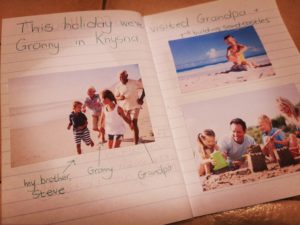
Experience books are personalized stories that can be both rewarding and exciting for children, as they become the main character in their own story. The creation of an experience book involves an interactive communication process between the child and the caregiver, which helps to lay the foundation for the natural development of listening, speech, and literacy skills. Experience books are fun, engaging, and highly motivational for everyone involved.
The Benefits of an Experience Book:
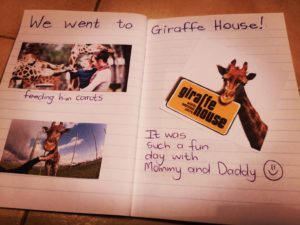
Creating an experience book helps children to share their experiences and stories with others. Experience books create visual cues that help children to describe their weekend or holiday experiences, including basic experiences like playing in the park or going shopping, as well as more complex experiences like weekend excursions and vacations. Experience books also help grown-ups, including grandparents and teachers, to communicate with children about their experiences.
By creating an experience book, a child can “relive” past experiences, and it is an excellent tool for reinforcing language skills and teaching new vocabulary. Experience books can be used to tell stories, practice receptive (comprehension) and expressive (use) language, revise educational moments, develop conversational skills, and answer questions.
Who can benefit from an Experience Book?
Most children aged 3 to 9 years old can benefit from an experience book. The book can be adapted to the child’s developmental and cognitive level.
How to Create an Experience Book:
The experience book should be a rough and ready book that won’t make anyone feel bad if it gets damaged, especially for younger children. To create an experience book, paste some photos of the child on their outings or experiences in the book. If the experience involved a visit to a place, such as Butterfly World, it is a good idea to paste a pamphlet of the venue. If something was eaten while on the outing, include a little box or paper covering in the book, or flowers or leaves collected at the venue. Routine activities at home, such as bath time, can also be included in the book.

Research suggests that experience books can be an effective tool for improving language and literacy skills in children. A study by Stadskleiv and Rygvold (2015) found that the use of experience books in a preschool setting led to significant improvements in children’s vocabulary and story retelling abilities. Another study by Hauser-Cram et al. (2017) found that experience books were an effective tool for improving narrative abilities in children with diverse learning needs.
In conclusion, experience books can be a practical tool for enhancing children’s language and literacy skills. They provide a fun and engaging way for children to share their experiences and stories, while also reinforcing language skills and teaching new vocabulary. By creating an experience book with your child, you can help to support their natural development of listening, speech, and literacy skills.

Reference list:
Hauser-Cram, P., Warfield, M. E., Shonkoff, J. P., & Krauss, M. W. (2017). Children with disabilities and their families: A synthesis of research across domains. New York: Oxford University Press.
Stadskleiv, S., & Rygvold, A. L. (2015). Creating an experience book together with a child as a tool for communication and language stimulation: A study from Norwegian preschools. International Journal of Early Childhood, 47(3), 387-402.